
Equavoice®
Startup - Product, UX Research, UI Design, Accessibility
Equavoice is an accessibility first collaboration tool that gives every attendee a chance to have an equal voice. It also gives presenters a way to gauge participation, and provide extra help to those that may need it. Equavoice is a student-project that turned into a startup that I failed to take to market.
CASE STUDY
October 2021 - April 2024
The Context/Background
The online world has given people the flexibility and choice for participation in group meetings and learning environments like never before. They are able to use polls, private chats, digital annotations etc. to participate at their own comfort level.
As we transitioned back to an in person world, we learned about the effects of the pandemic on social anxiety. While this is not a new problem, it became much bigger and much more prominent.
While there are tools like digital whiteboards and quiz platforms available, there are some inherent issues that they lack in addressing.
The Problem
As we went back to in-person classrooms and conferences, the quiter people lost their voice. Moderators had to rethink how to get people involved and track where participation lacks. Multiple tools (whiteboarding + quiz + chat) may be required to be used at the same time which poses a challenge for the moderator to manage.
Digital whiteboarding tools are not very accessible for the disabled community as well as for those that are not tech savvy. Whiteboarding tools also don’t offer a way to easily “track” participation, which is crucial when trying to address grades or competitive/order-wise participation.
Quiz platforms may not offer opportunities to ask questions or get everyone involved.
The Solution
To create a product that can:
Help keep ALL voices alive by giving people the tools to participate at their own comfort levels.
To also give moderators a way to track how much/ how little someone is participating. This will help them provide extra help to those that might need it most, but are often unable to ask for it.
The Progress
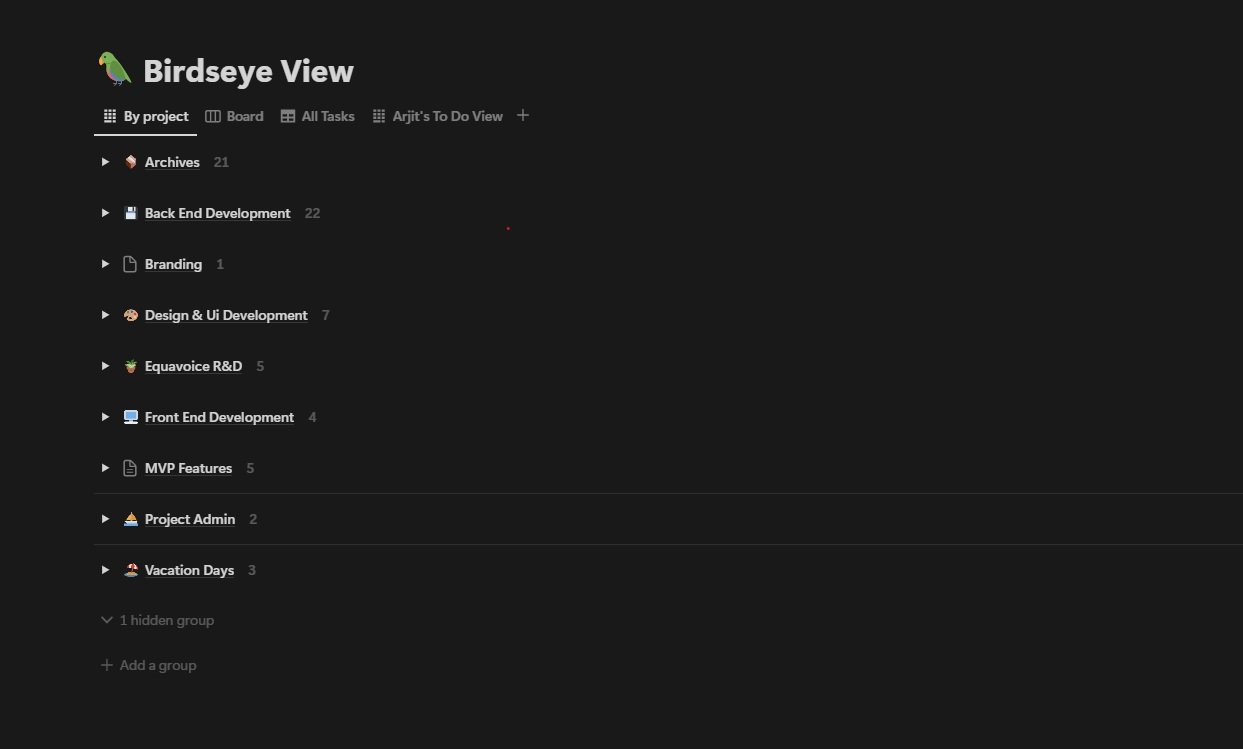
Project Management on Notion
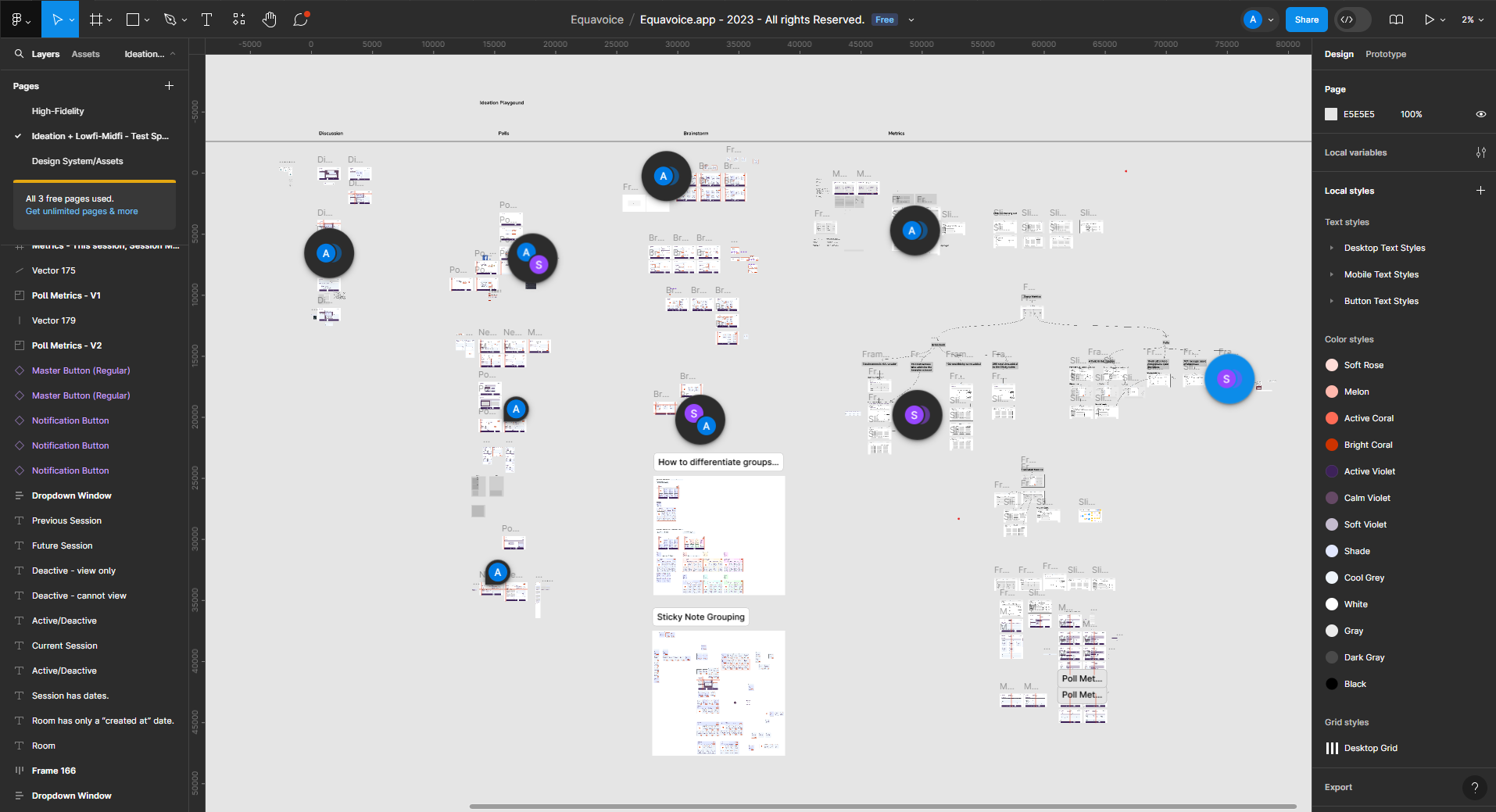
Lo-fi/Mid-fi Ideation
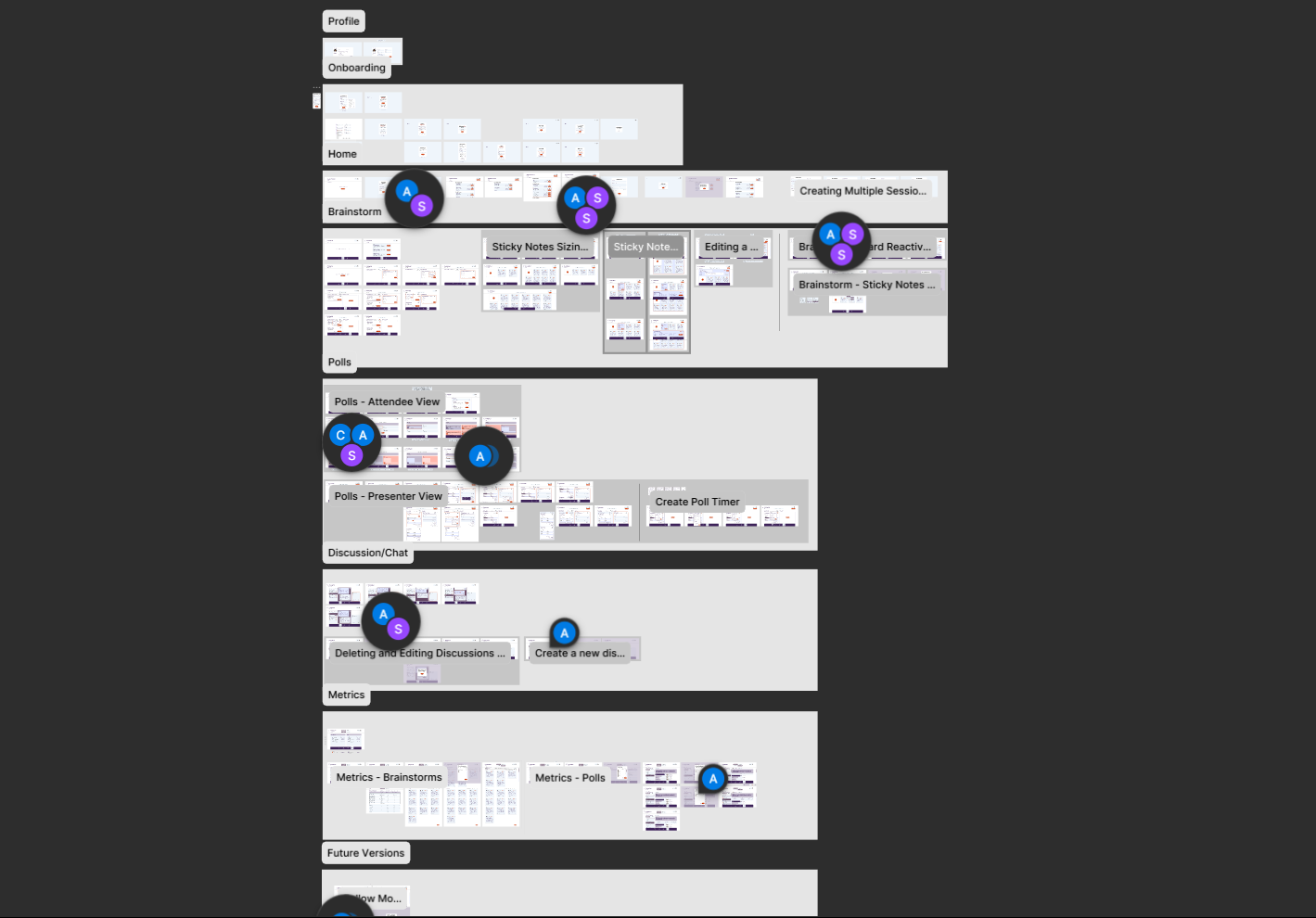
Hi-fi Wireframes + Overseeing Development
Equavoice Journey:
October 2021
I started this as a school project with a partner during my post-grad studies.
October 2022
I brought on a co-founder to continue developing this project. Started developing but realized we needed more resources. Got 2 people to join to lead various verticals. Lost 1 of them due to time commitment issues.
Early 2023
Registered Equavoice as a business. Continued conversations with anyone that lended a ear to try and perfect the pitch and requirements for Equavoice.
Made the decision to keep the product bootstrapped because we realized that accessibility needs to be our number one priority, and bringing in investors may force us to lose control over this crucial differentiating factor of this product.
Summer 2023
Hired a developer and a design intern. We designed and developed a minimum viable product. Started showing the design/development progress to people to get feedback and ideas where possible.
Fall 2023
We performed a round of internal QA and Testing, and made changes accordingly.
Fall 2023 - Summer 2024
Through a lot of scope creep and trying to hone in on the product's requirements to succeed in the market, we continued to delay our first user testing. Sporradic design, development, and planning sessions but no real progress. Life happened and our responsibilities started to change as a team.
Late 2024/Early 2025
Through continued research, I realized that equavoice would require a lot more resources than I could spare to create a tool that would beat what’s already available in the market and it wasn’t something we were able to commit to at the time.
Biggest learnings as a founder at Equavoice:
This project gave me an opportunity to step outside my regular design-centric responsibilities and challenged me to consider many other aspects of building a SaaS product.
Leading product development and handling finances for 2 part time employees is not easy, especially when it’s a part-time project. It requires commitment, rigor, empathy, quick knowledge building abilities, etc.
Build solid plans and roadmaps before jumping into design and development. It saves time and helps avoid scope creep.
Run a thorough competitive analysis. Your idea is likely not new and has probably been tried in at least some form before.
Test for a true product market fit as early as possible. While people will say there is value in your product, they’ve likely not already explored all of what is already available in the market.
Making accessibility a part of your differentiating factor for a digital tool can help you create a product that is accessible for a wider audience but making accessibility as one of your first differentiating factor can help the entire team realize why they should care.